Material Interactions
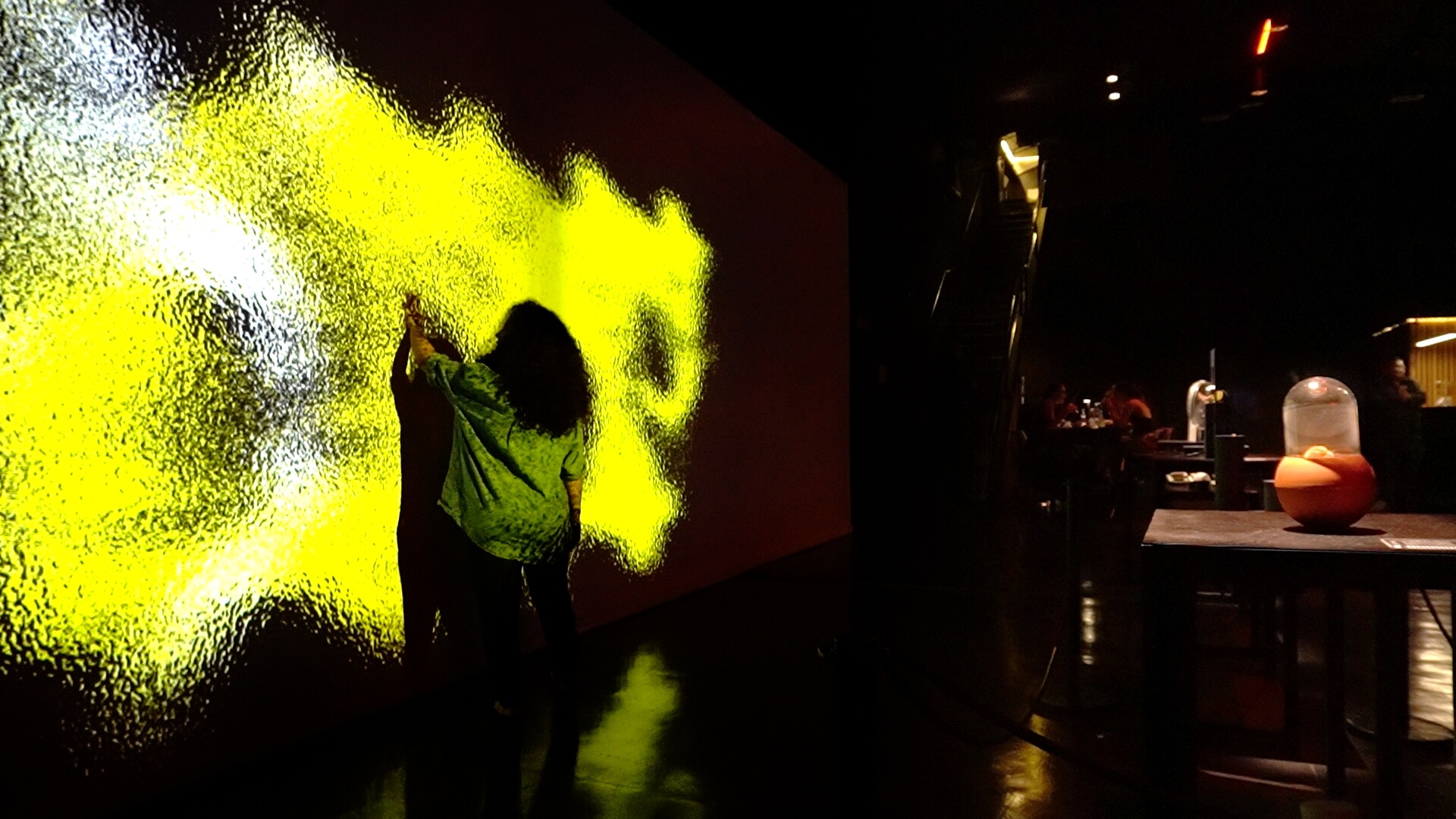
Heidi Jalkh, a long time collaborator, contacted me because she was working on a new project Material Interactions. It all started as an edit for a video wall to complement the exhibition that tool place in ArtLab with her collaborator Nadya Suvorova— then I realised we had access to a TouchDesigner system on a 3×10 metre screen with full Lidar interaction. That's when I told Heidi that after I finished the video editing I would like to build an interactive piece for the wall.
Emergent Growth
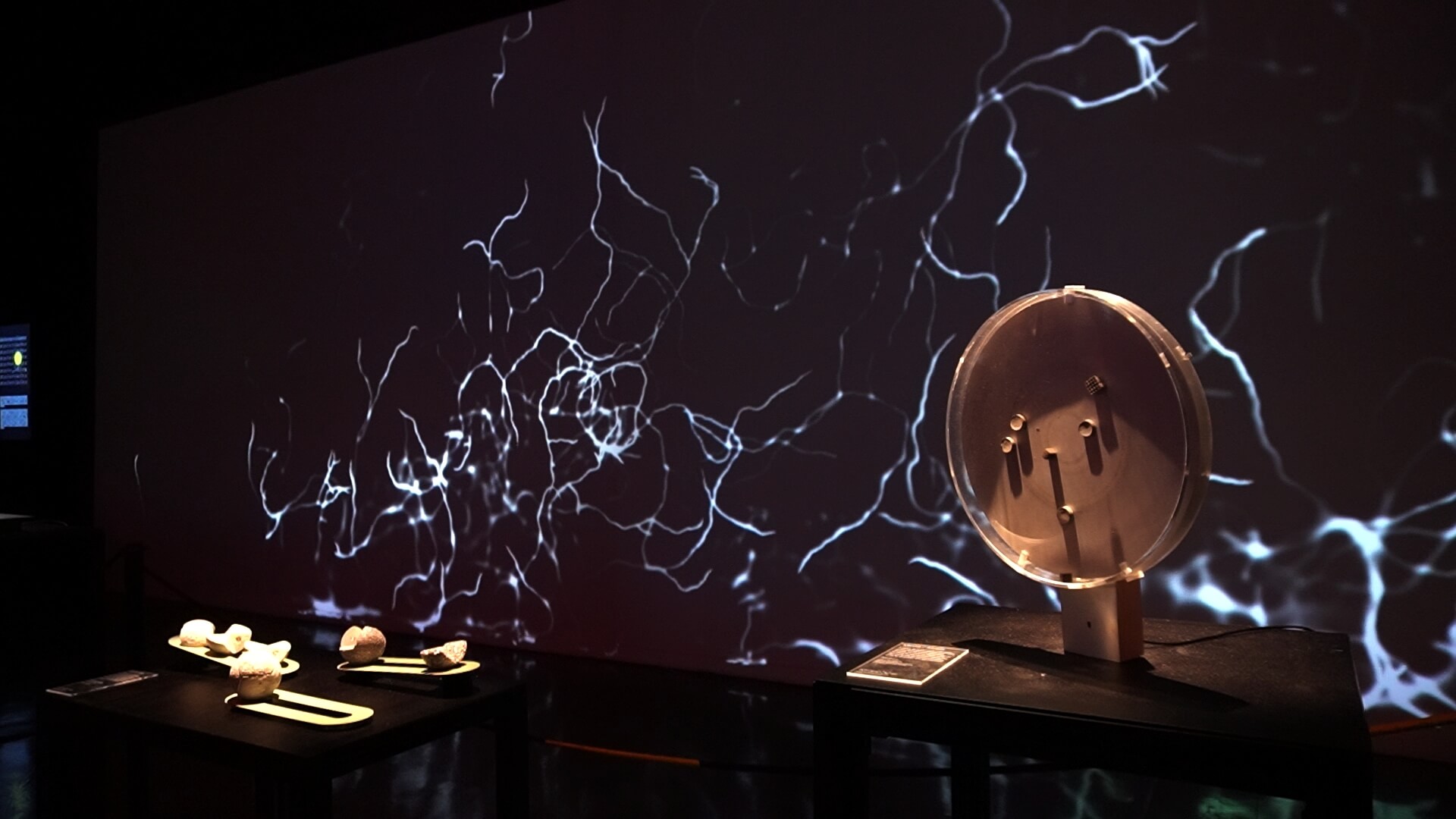
Physarum walkers explore how complex organic forms emerge from simple behavioural rules — growth driven by nutrient trails, constrained by physical forces, shaped by environmental feedback. No explicit geometry is programmed; instead, intricate structures unfold: coral-like branches, folded organs, mycelial networks. A computational study of morphogenesis as a substrate for understanding how form arises from process rather than design.
Molecule Simulation
The most technically involved of the three. At its core is a question: what if the chemistry could be watched as it happens?
Actual 3D molecular geometries for alginate and calcium carbonate are pulled directly from PubChem's open scientific database — the same data researchers use. A custom Python pipeline parses these files atom by atom, reconstructing each molecule with its real bond lengths, angles, and electrostatic charges.
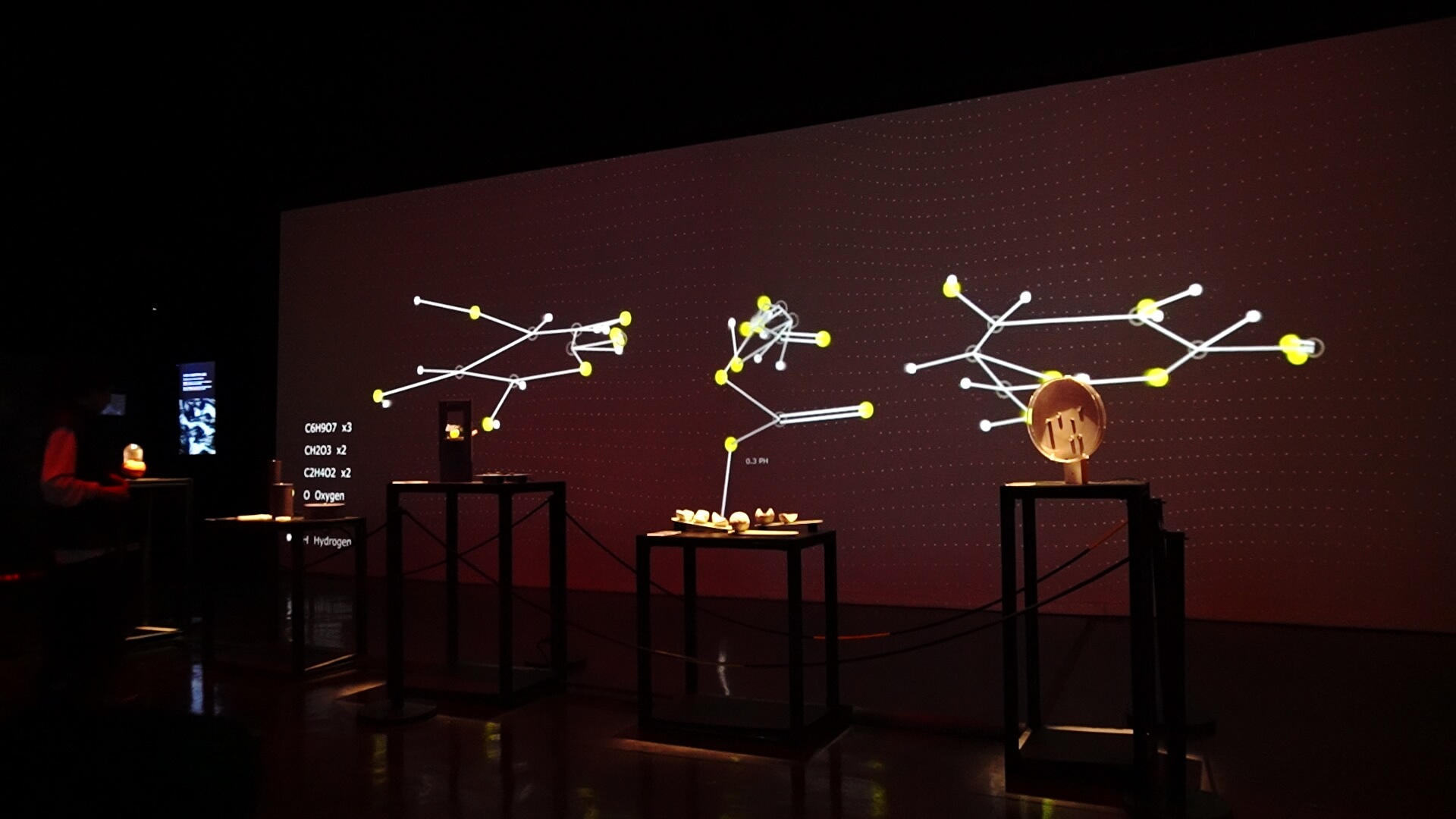
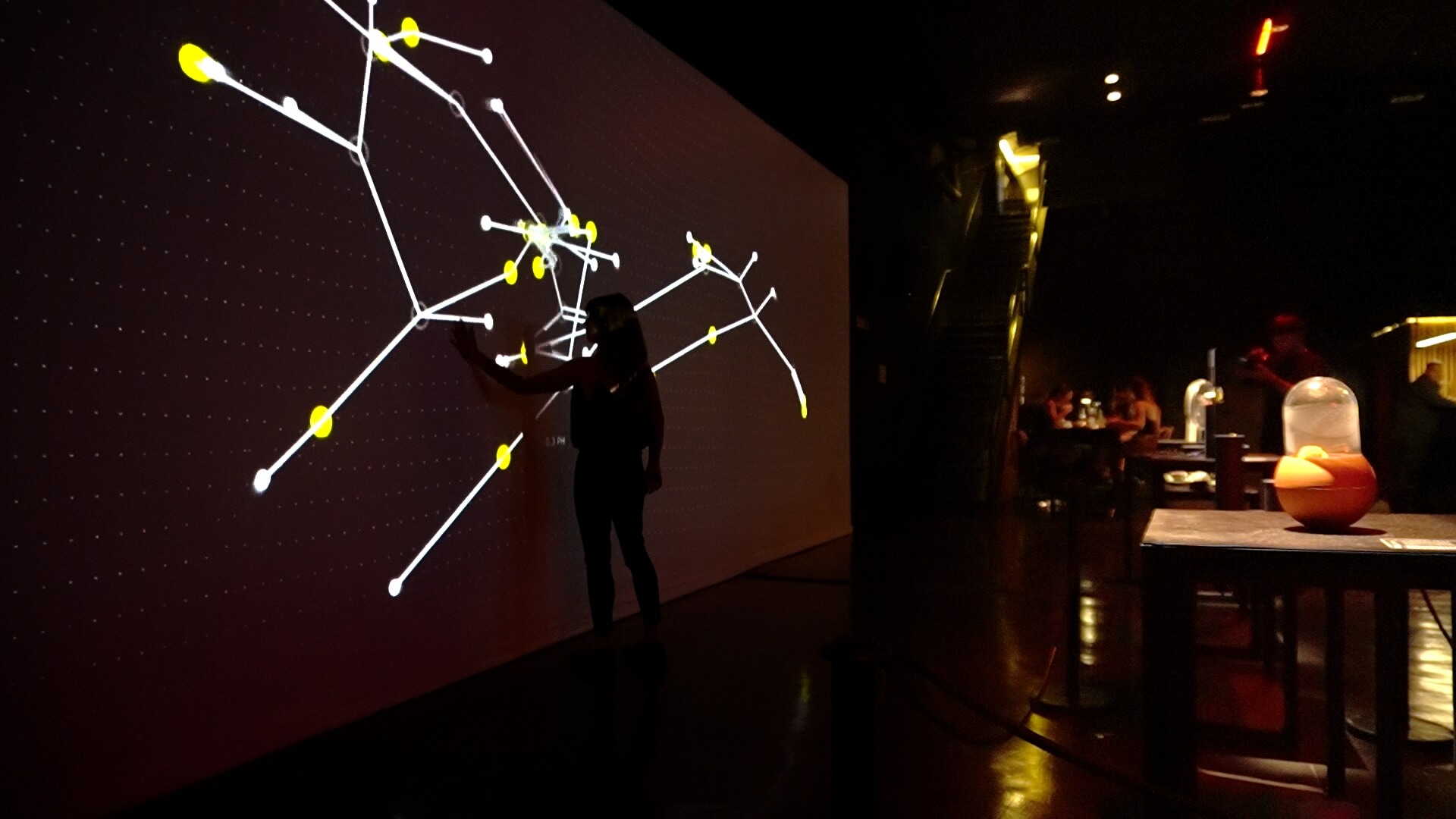
From there, everything runs on the GPU: a GLSL physics simulation where molecules drift, collide, and respond to each other through simplified but chemically grounded forces — Lennard-Jones interactions, Coulombic attraction, harmonic spring bonds. As acetic acid dissolves the calcium carbonate in real time, freed Ca²⁺ ions are drawn across the frame toward the alginate chains, bridging two carboxylate groups from different molecules in the same egg-box crosslink that gives the physical sculpture its form. What you are watching is not an animation — it is the material reasoning through itself.
Metal Foam
A custom Python algorithm mathematically constructs a volumetric gyroid network — introducing organic jitter to simulate the intricate porous structure of real metallic foam. A bespoke GLSL shader then processes the resulting 3D point cloud in real time, applying depth-aware rendering and layered glows that respond to visitor touch and spatial proximity.